Muncie TPO Roofing Contractor
Heat-Welded Seams Around Every Curb, Drain, and Parapet
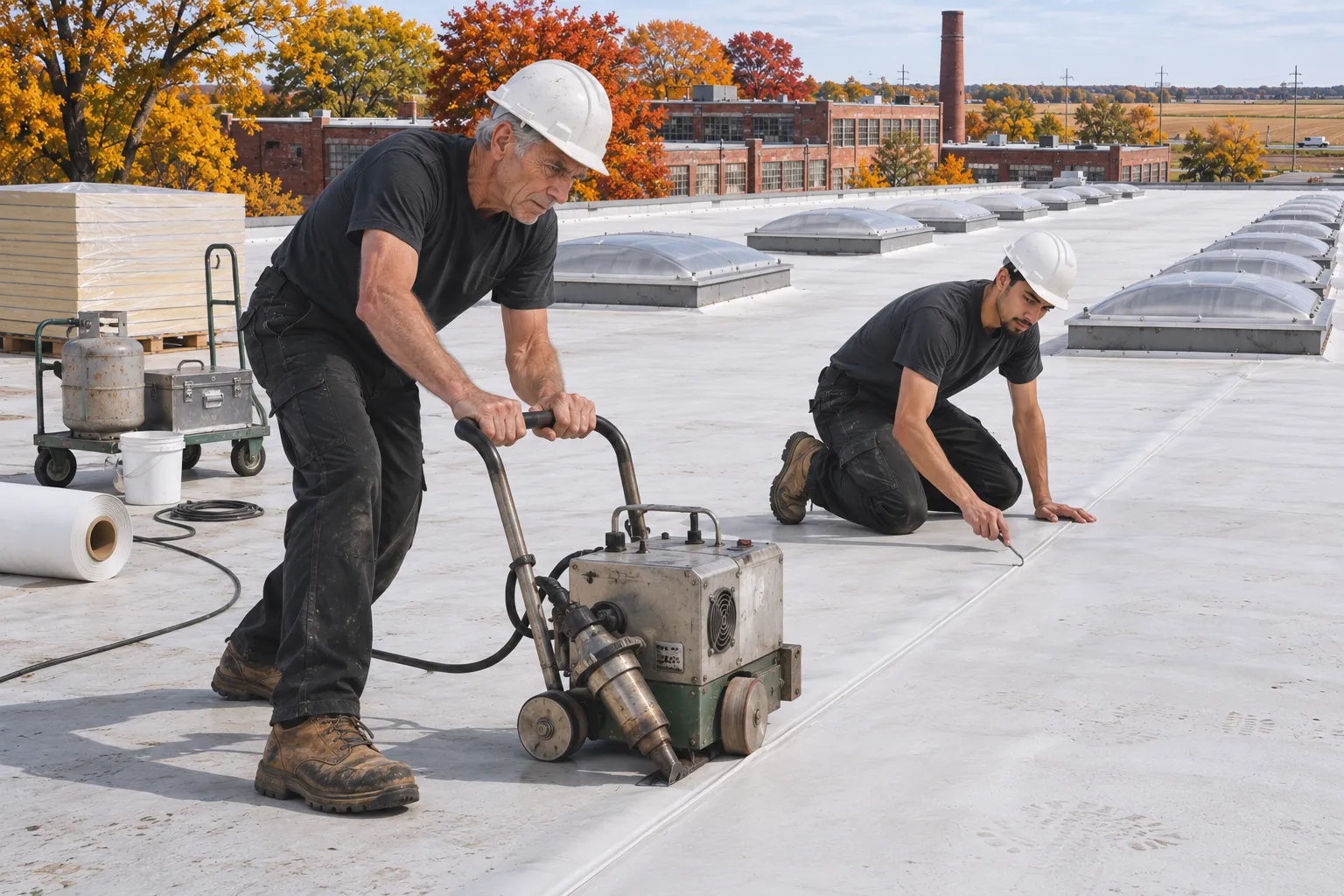
As a Muncie TPO roofing contractor, we install white TPO membrane on low-slope roofs, welding every seam and flashing each curb and drain.
- SeamsHot-air welded, then probed
- ColorWhite, reflective surface
- ThicknessMatched to roof traffic
- AttachmentFastened or fully adhered
Is Your Roof a Fit for Muncie TPO Roofing?
Muncie TPO roofing goes on best over a dry deck with drains that carry water away. These conditions show when TPO fits now and when another step comes first.
- Usually Fits
- Sometimes
- Rarely
| What You See On The Roof | TPO Recover | Tear Off, Then TPO | Fix Something First |
|---|---|---|---|
| Low-slope roof with dry insulation and working drains | Usually Fits | Sometimes | Rarely |
| One layer of old built-up or modified bitumen roofing | Usually Fits | Sometimes | Rarely |
| Wet insulation over a third of the roof or more | Rarely | Usually Fits | Sometimes |
| Ponding that sits for days beside clogged drains | Sometimes | Sometimes | Usually Fits |
| Many rooftop units and frequent service traffic | Sometimes | Usually Fits | Rarely |
| Rusted steel deck at the low spots | Rarely | Sometimes | Usually Fits |
TPO over a recover board stays on the table only where the core cuts come back dry.
TPO Roofing Problems We Fix on Muncie Buildings
These conditions lead most owners to a new TPO roof or a large TPO repair.
Weld Lines Lifting
Seams welded too cool or too fast can peel back at the edge. A probe along every lap finds the weak spots, and fresh welds or cover strips close them.
Hail Bruises in the Field
Hailstones crack the membrane surface and crush the insulation under it. From the ground the roof looks fine, and a walk after the storm finds the dents and splits.
Flashing Split at Unit Curbs
Corners around air handlers and exhaust fans take the most movement. Torn or shrunk flashing there sends water straight down the curb to the ceiling below.
Low Spots Holding Water
Standing water near drains bakes the membrane in summer and freezes against the seams in winter. Tapered insulation or a new drain moves it off the roof.
Plates Lifting Through the Sheet
On mechanically fastened roofs, wind uplift and deck movement can push plates up into the membrane. Each one becomes a small tent that wears through.
Older Membrane Shrinking
First-generation TPO can harden and pull at its terminations. Once the sheet starts tearing at the edges, patching chases one split after another.
TPO Roofing Options for Muncie Roofs
Every TPO roof comes from a few choices: how the sheet is held down, how thick it is, and what goes under it.
| Option | What It Means On Your Roof | Where It Fits |
|---|---|---|
| Mechanically fastened | Plates and screws hold each sheet at the lap, and the next sheet is welded over them. | Steel decks with dry insulation |
| Fully adhered | The membrane is glued to a cover board, so the surface lies flat without flutter. | Roofs with heavy foot traffic or exposed wind edges |
| Thicker membrane | A heavier sheet adds more wear layer over the reinforcing scrim. | Plant roofs and busy service routes |
| Tapered insulation | Boards cut on a slope steer water toward the drains. | Roofs with ponding between drains |
New TPO Roofing vs. Repair on Muncie Buildings
Repairs make sense when the trouble is local. A new TPO roof makes sense when the problems repeat across the roof.
| Roof Detail | Repair The Existing Roof | New TPO Roof |
|---|---|---|
| Seams | Bad laps get re-welded or covered with strips. | Every lap is new and probed at the end of each day. |
| Insulation | Only the wet boards are swapped. | Dry boards throughout, with tapered sections where water ponds. |
| Curbs and walls | Flashing is patched where it failed. | Every curb, wall, and drain gets new flashing. |
| Surface | The old sheet keeps aging around the repairs. | A clean white surface that reflects summer sun. |
| Job length | Hours or a few days. | Planned in sections over days or weeks. |
Seam Opening on Your TPO Roof?
Call and tell us where the leak shows inside. We will check the welds, curbs, and drains above it.
How a TPO Roofing Job Runs in Muncie
A TPO job follows the same four stages every time, with weld checks built into each workday.
Inspect And Core The Roof
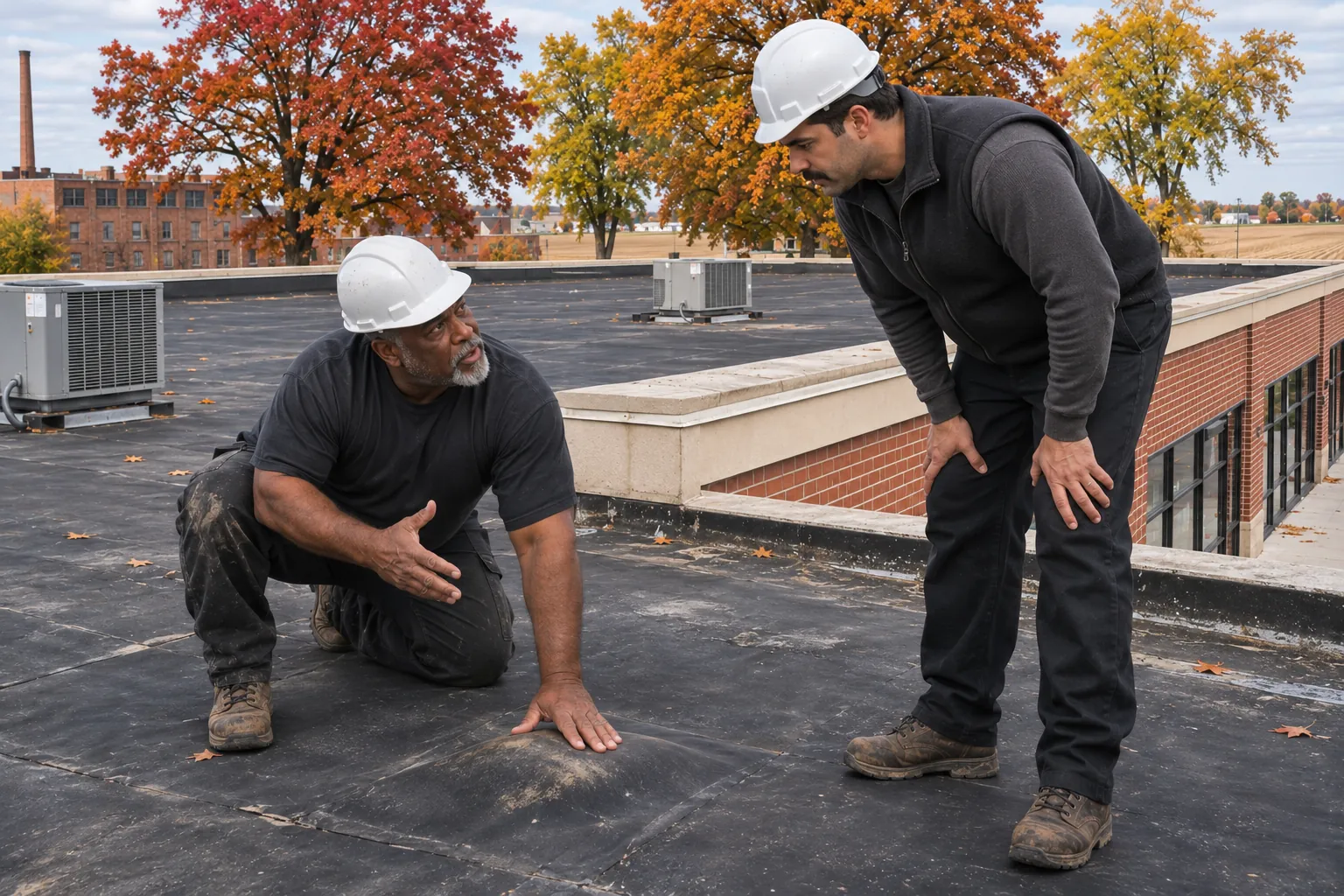
We walk the roof with you, run moisture readings, and cut a small core to see the layers. That tells us whether TPO can go over the old roof or needs a clean deck.
Remove Or Prepare Layers
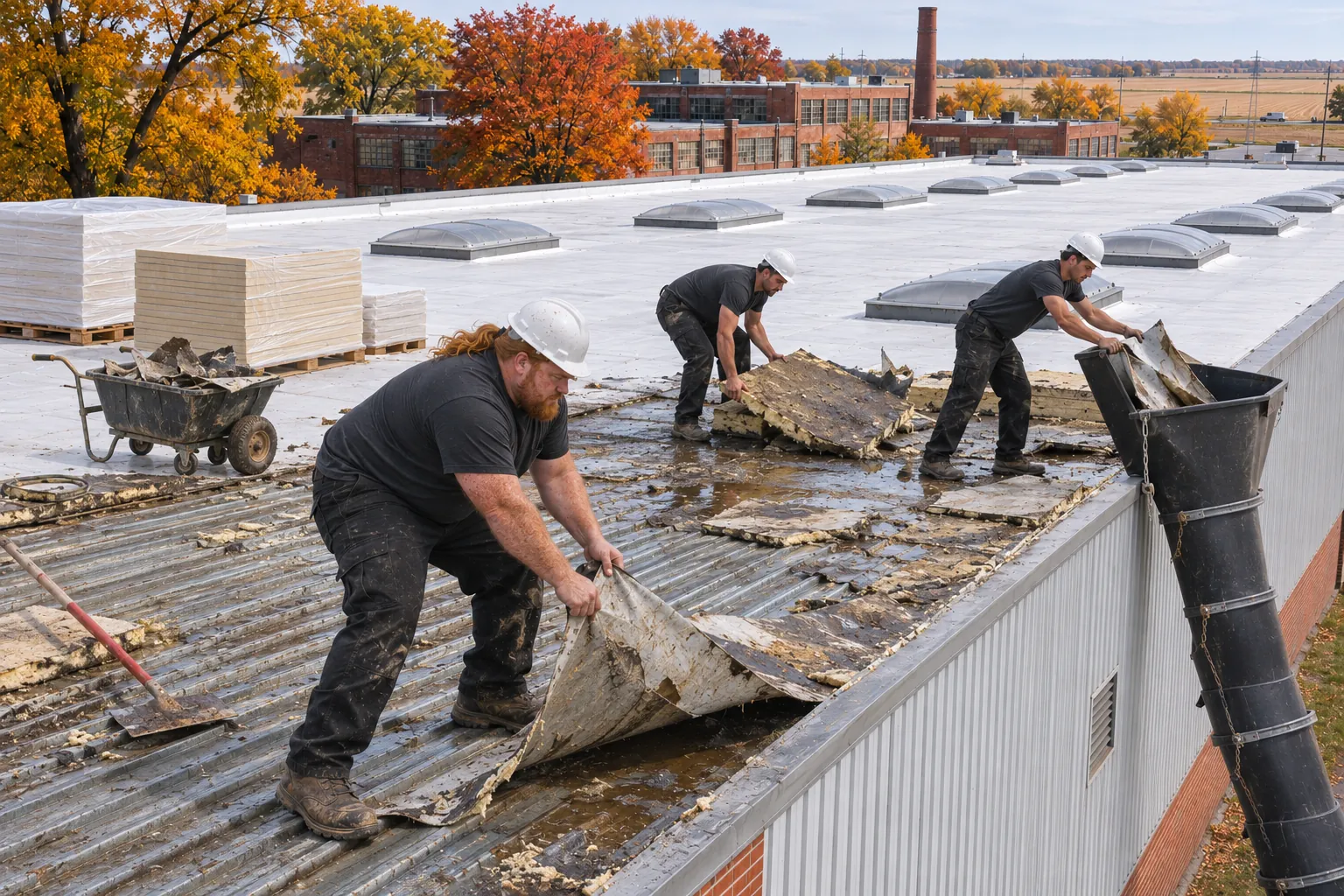
Wet boards come out and get replaced, or the roof is torn off to the deck in sections. Rusted deck plates are cut out before insulation goes back.
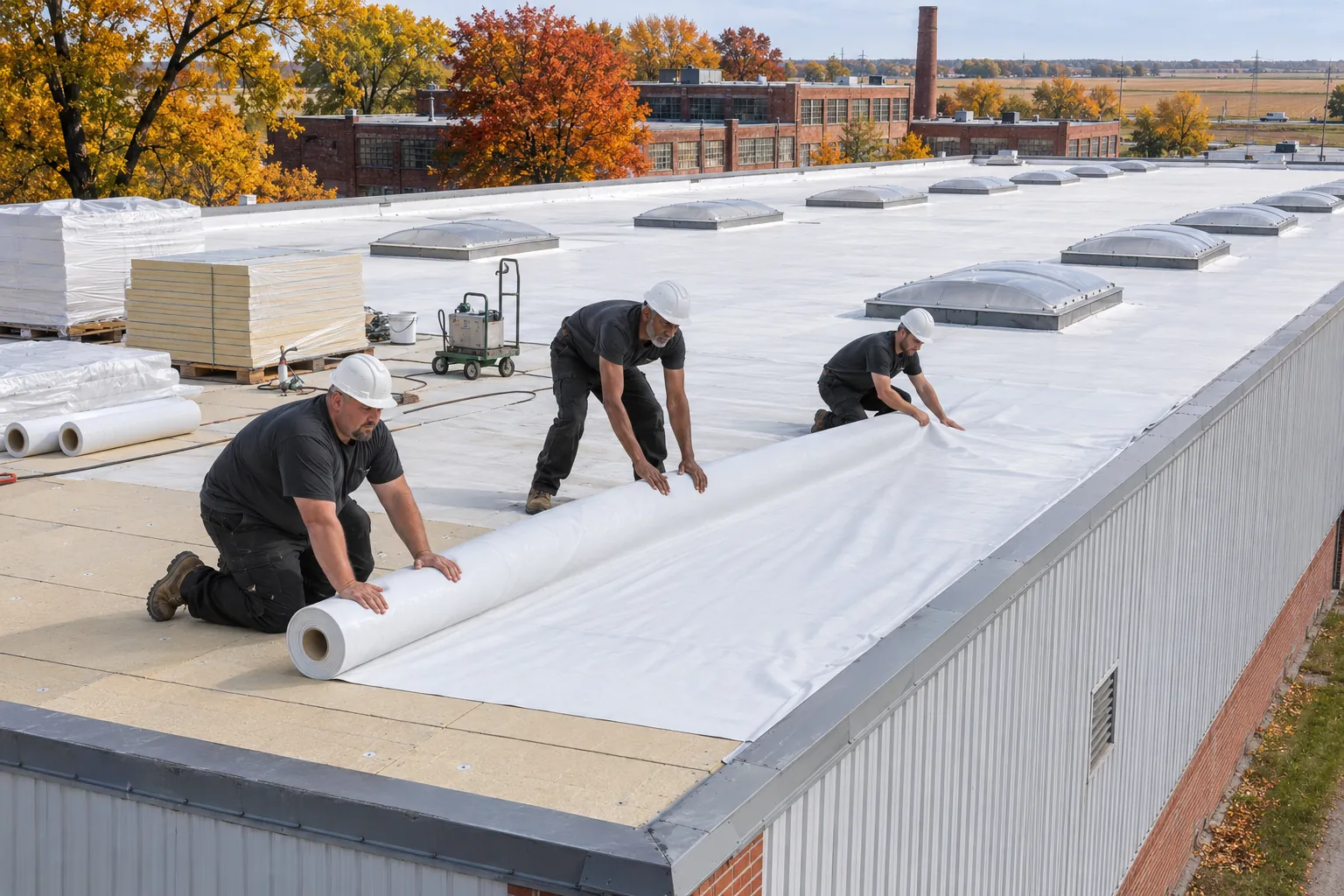
Lay And Weld The Membrane
Sheets are fastened or adhered, then each lap is hot-air welded and probed. Curbs, walls, and drains get their flashing as each section closes.
Clean Up And Walk It
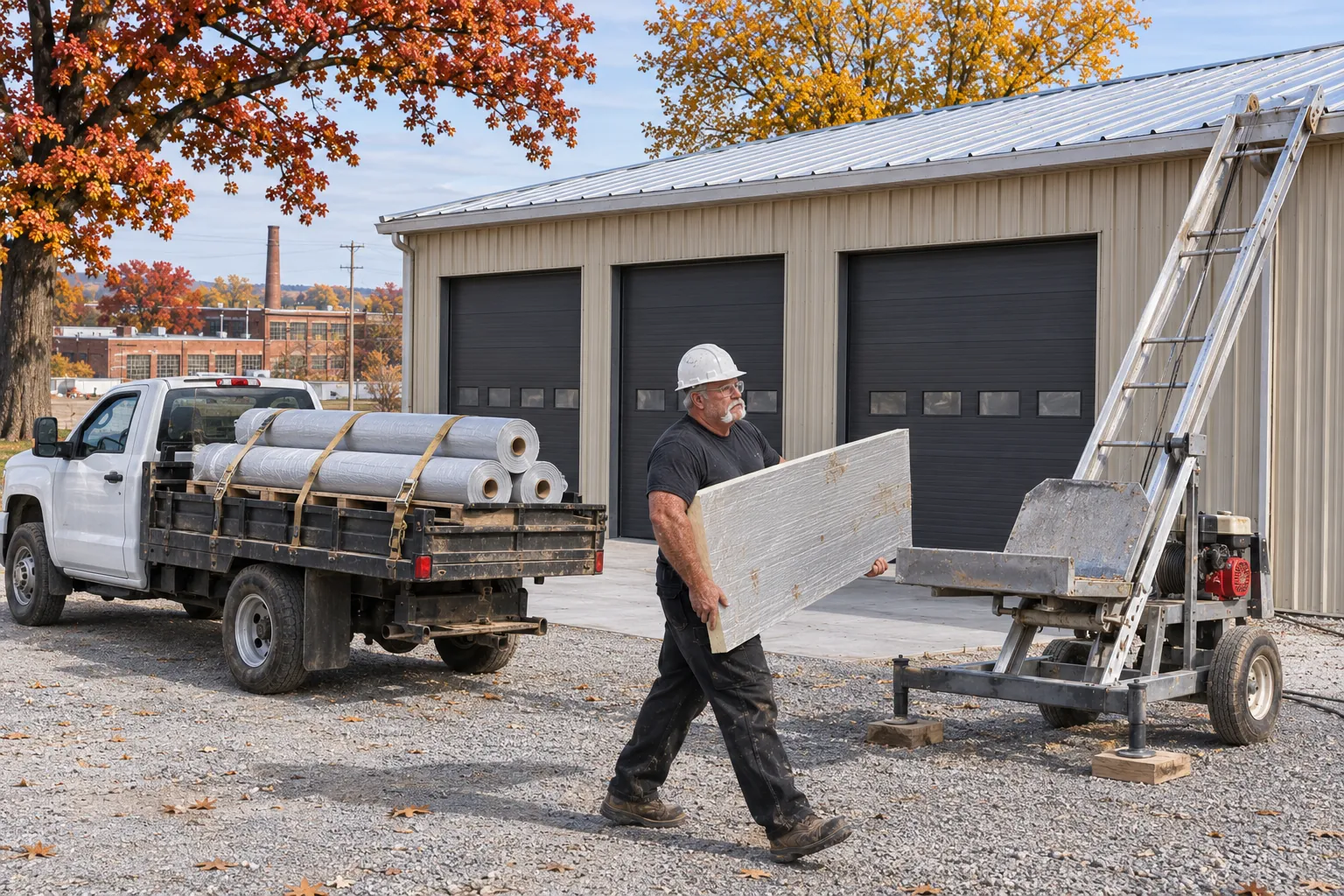
Scrap leaves on the truck, drains are cleared, and we walk the finished roof with you, probing a final sample of seams along the way.
Other Roof Systems We Install
Some buildings need a second system on another roof area, such as metal panels over an addition.
EPDM Roofing
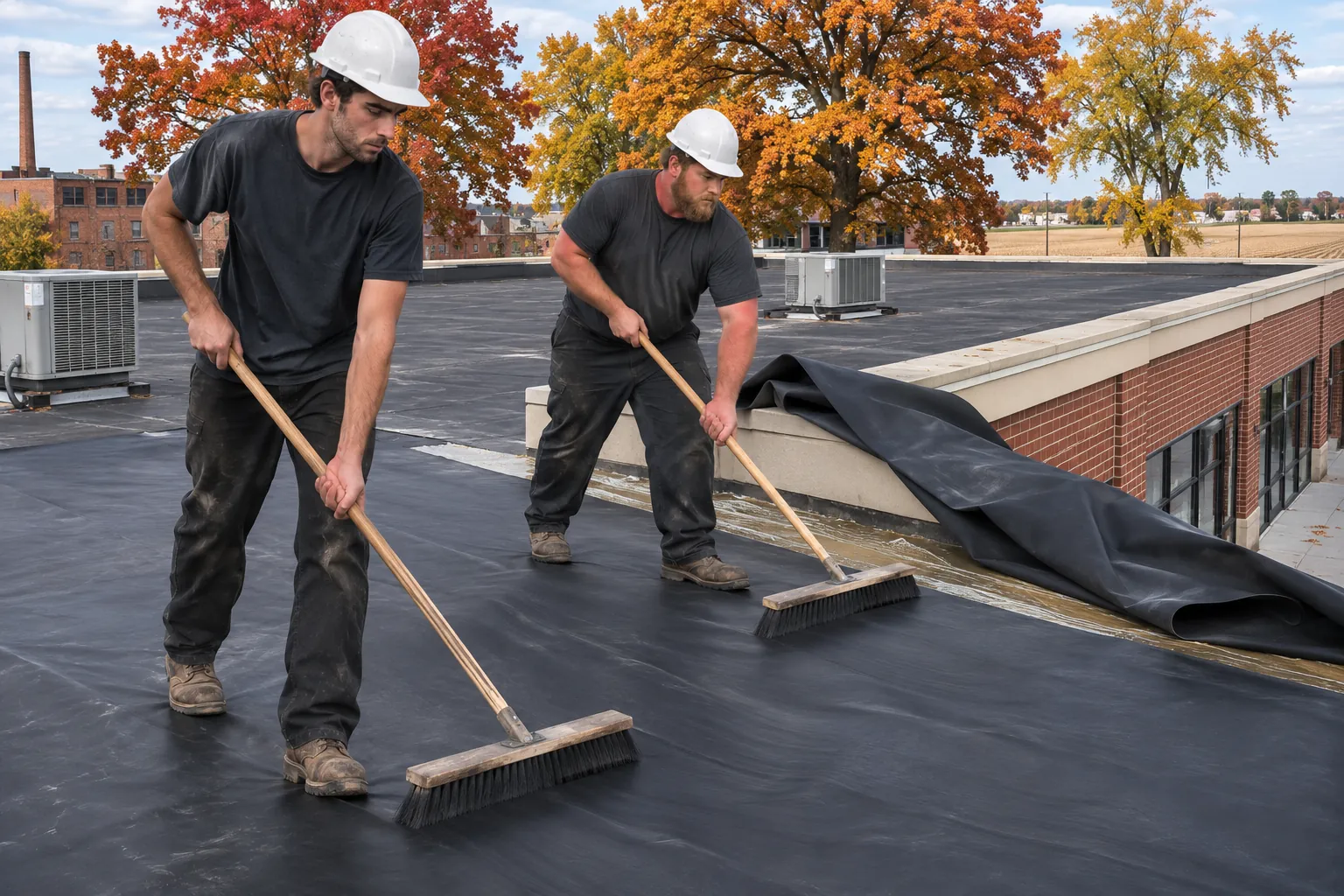
EPDM rubber stays flexible in deep cold and repairs simply, which suits flat roofs that get patched and maintained over many winters.
Industrial Roofing
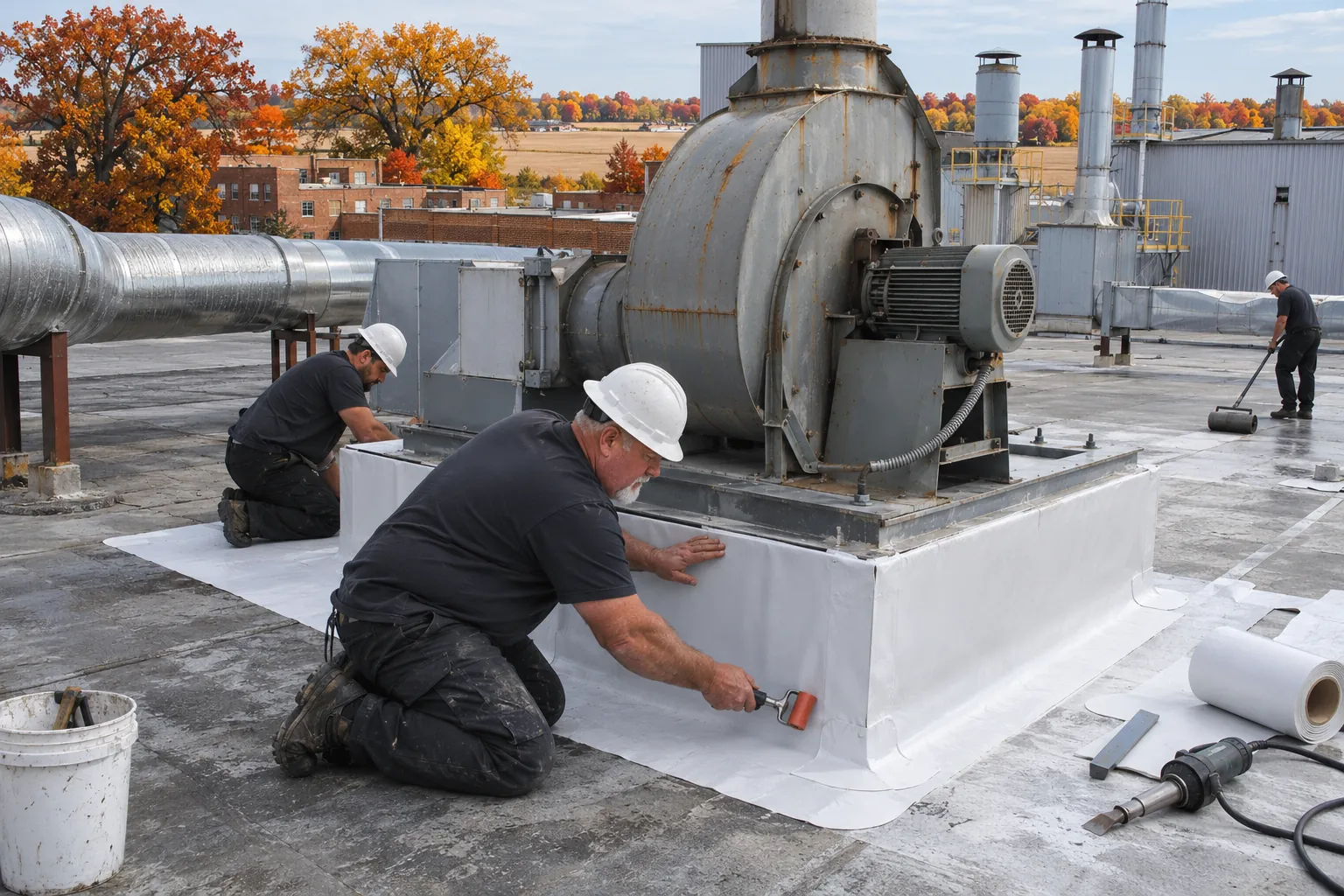
Plant roofs with heavy exhaust and steady service traffic need membrane, walkway pads, and curb heights chosen for that load.
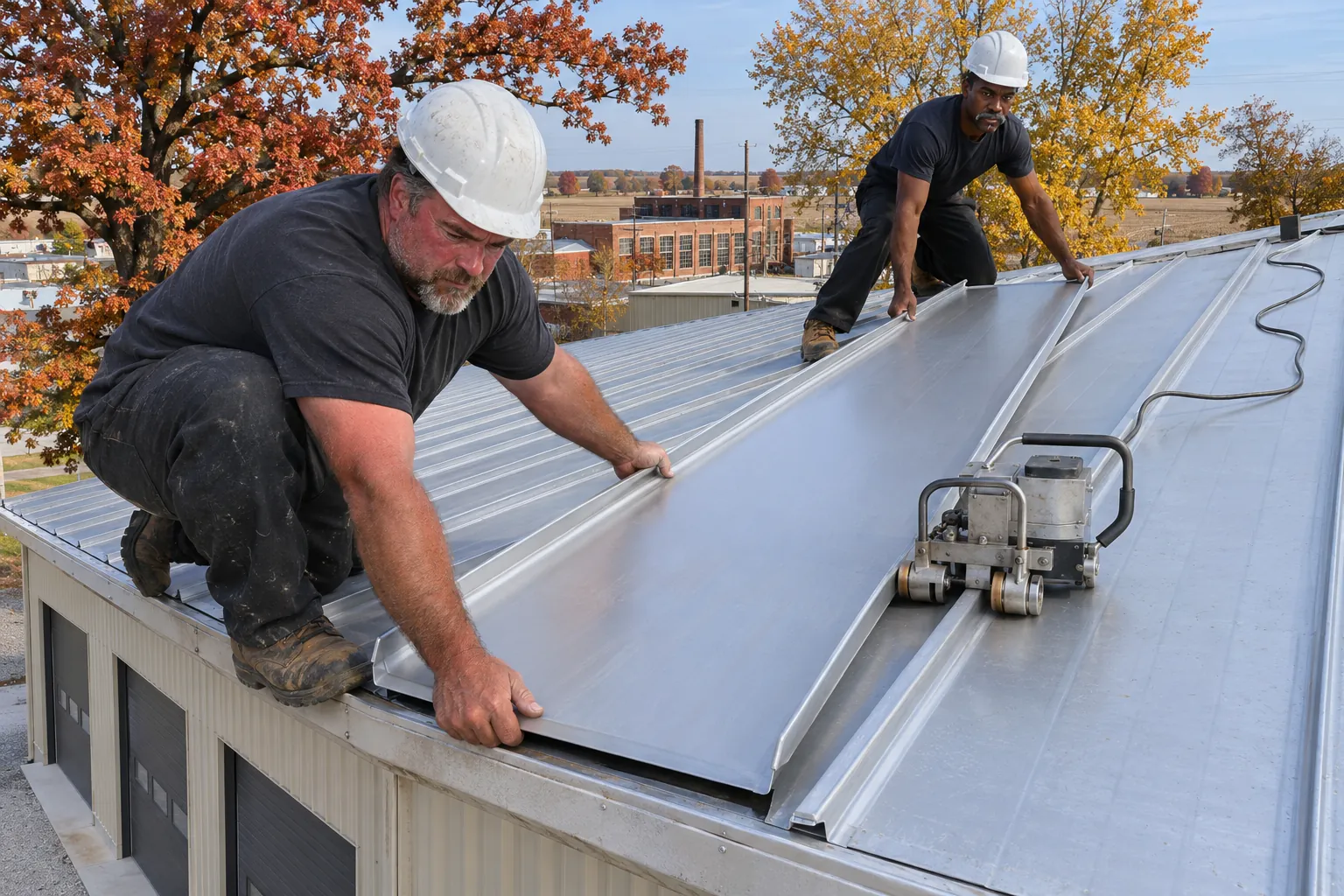
Commercial Metal Roofing
Standing-seam panels on sloped areas and retrofit framing over old flat roofs give water a fast path off the building.
TPO Roofing Questions From Muncie Owners
How does TPO roofing in cold weather hold up on Muncie roofs?
Flexible, welds hold
TPO stays flexible through normal winter movement, and its heat-welded seams hold without relying on glue that cold weakens. During winter installs, frost, snow, and adhesive temperature limits are the concerns, so we dry the deck, use cold-rated products, and seal each section before quitting.
Can a TPO roof last 30 years on a Muncie building?
Some do
Some reach it, and plenty fall short. Membrane thickness, weld quality, drainage, and upkeep set the pace, and ponding, hail, and foot traffic to rooftop units wear TPO faster. Around 20 to 30 years is a common expectation with regular inspections, and thicker sheets with good drainage help a roof reach the longer end.
What are the downsides of TPO roofing on Muncie commercial roofs?
Seams and punctures
Its weak points are the seams, which depend on careful welding, a surface that dropped tools or hail can puncture, and footing that gets slick when wet or frosty. Quality also differs between manufacturers. We probe every seam, add walkway pads on service routes, and size the membrane to the roof traffic.
TPO vs EPDM: which roof fits a Muncie building better?
Depends on the building
Both handle low-slope roofs well. White TPO reflects summer heat and joins at welded seams, while black EPDM flexes easily in cold and has a long track record. TPO often suits roofs with heavy cooling loads, EPDM suits roofs where simple repairs matter, and the deck and rooftop equipment help settle it.
How does spring hail damage commercial roofs in Muncie?
Bruises and cracks
Hail can puncture or bruise single-ply sheets, crack aged seams, crush the insulation underneath, and dent metal panels. Little of it shows from the ground. A roof walk soon after the storm finds the damage, and photos taken that day help if you file an insurance claim.
Hire a Muncie TPO Roofing Contractor
Tell us about the roof and the building below it, and we will walk it, core it, and write up a TPO scope.