Muncie EPDM Roofing Contractor
Fresh Rubber Membrane Over a Dry, Repaired Deck
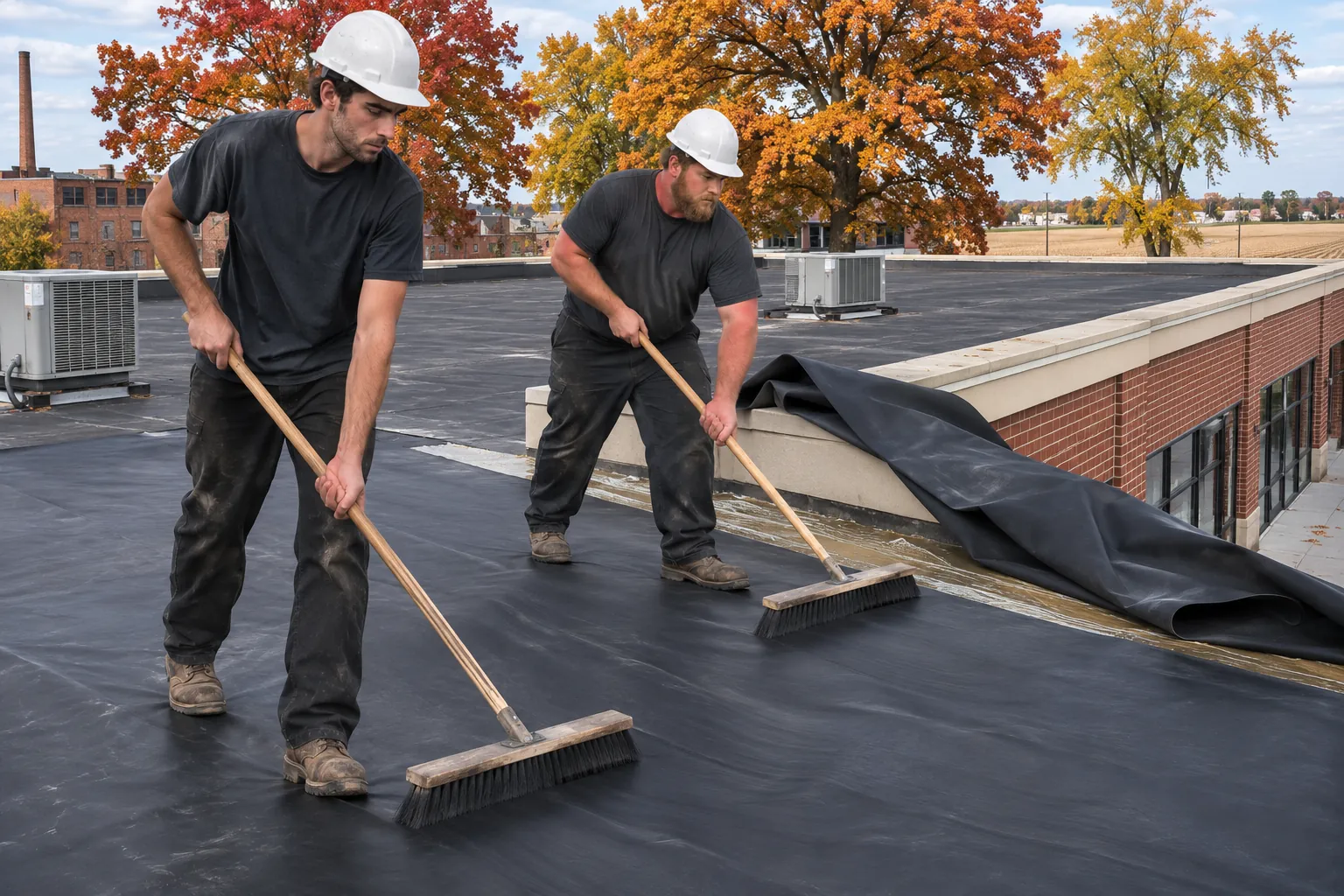
As a Muncie EPDM roofing contractor, we install black rubber roofs on flat commercial buildings, taping every seam and reflashing walls, curbs, and drains.
- MembraneBlack EPDM rubber sheet
- SeamsPrimed and taped laps
- ColdStays flexible in winter
- Hold-DownAdhered, fastened, or ballasted
Is Your Roof Ready for Muncie EPDM Roofing?
Muncie EPDM roofing goes over many old flat roofs once the wet layers are out. Match what you see on your roof to the EPDM job it points to.
- Usually Fits
- Sometimes
- Rarely
| What You See On The Roof | EPDM Recover | Tear Off, Then EPDM | Repair The Old Roof |
|---|---|---|---|
| Old EPDM with shrinking flashing but dry insulation | Usually Fits | Sometimes | Sometimes |
| Ballasted roof where stone hides the membrane | Sometimes | Usually Fits | Rarely |
| Seams open in several places across the roof | Sometimes | Usually Fits | Sometimes |
| Wet insulation at many of the core cuts | Rarely | Usually Fits | Rarely |
| One leak at a drain on an otherwise firm roof | Rarely | Rarely | Usually Fits |
| Building with little spare structural load | Usually Fits | Sometimes | Sometimes |
Ballast weight and the structure come up before any recover over a stone-covered roof.
EPDM Roofing Trouble Spots on Muncie Roofs
Rubber holds up to cold well. The trouble on most EPDM roofs starts at the seams, edges, and drains.
Seam Tape Letting Go
Laps glued with older adhesive or tape dry out and lift at the edges. Water that slips in freezes, wedges the seam wider, and soaks the boards beneath.
Membrane Pulling Off Walls
EPDM shrinks a little each year, and the pull shows at parapets and curbs where the sheet bridges the corner. Those tented spots split under foot or ice.
Ice Backing Up at Drains
Snowmelt that refreezes around a drain bowl pushes water under the clamping ring and flashing. Strainers packed with debris make it worse in spring.
Punctures From Foot Traffic
Dropped tools, loose screws, and boots near rooftop units nick the rubber. Small holes let water spread a long way under an adhered sheet before a stain appears.
Wet Boards Under Ballast
Stone hides the membrane on ballasted roofs, so leaks can soak the insulation for months before anyone sees them. Moisture readings find the wet zones.
Water Ponding in Low Bays
Settled decks and crushed insulation leave shallow pools that stay wet between rains. Rubber tolerates water better than most sheets, yet seams in those bays fail first.
EPDM Roofing Choices for Muncie Buildings
Most EPDM decisions come down to how the sheet is held down and how the seams are made.
| Option | What It Means On Your Roof | Where It Fits |
|---|---|---|
| Fully adhered | Adhesive glues the sheet to a cover board, leaving a smooth, wind-resistant surface. | Roofs that get walked often or need easy inspections |
| Mechanically fastened | Plates hold the sheet along the laps, with less adhesive work on cold days. | Steel decks and winter installs |
| Ballasted | Loose-laid rubber held down by river stone. | Strong structures with low wind exposure |
| Reinforced EPDM | A scrim inside the sheet resists punctures and tears at fasteners. | Fastened roofs and busy service areas |
New EPDM Roofing Compared With Patching in Muncie
Patching buys time on a rubber roof that is mostly dry. Replacement fits when leaks keep moving around the roof.
| Roof Detail | Patch The Rubber | New EPDM Roof |
|---|---|---|
| Seams | Lifted laps get cleaned, primed, and covered with new tape. | All new laps with factory tape and primer. |
| Flashing | Loose corners are reset and stripped in. | Walls, curbs, and drains all get new flashing. |
| Insulation | Wet spots are cut out where readings show them. | Dry boards across the whole roof. |
| Ballast | Stone is moved aside for the repair and put back. | Option to switch to an adhered roof with less weight. |
| Cost over time | Lower now, with more patches likely each year. | Higher now, then routine checks. |
Water Getting Under Your Rubber Roof?
Call and describe the stain or drip. We will trace it back to the seam, drain, or flashing that let it in.
Steps in an EPDM Roof Installation
Every rubber roof follows four steps, with seam work done only on dry, primed surfaces.
Survey The Old Roof
We walk the rubber with you, check every lap and wall corner, and take moisture readings to map wet boards before choosing a recover or tear-off.
Strip And Dry In
Old rubber, ballast, or wet insulation comes off in sections small enough to cover by evening. New boards go down over the cleaned deck.
Roll Out And Seam
Sheets are laid flat and left to relax, then laps are primed and taped. Walls, curbs, and drains are flashed with matching EPDM.
Check And Hand Over
Every lap edge is checked by hand, drains are cleared, and you get photos of the finished details with care notes for the roof.
Roof Systems That Pair With EPDM
Larger properties often carry more than one roof type, so these systems come up alongside rubber roofs.
TPO Roofing
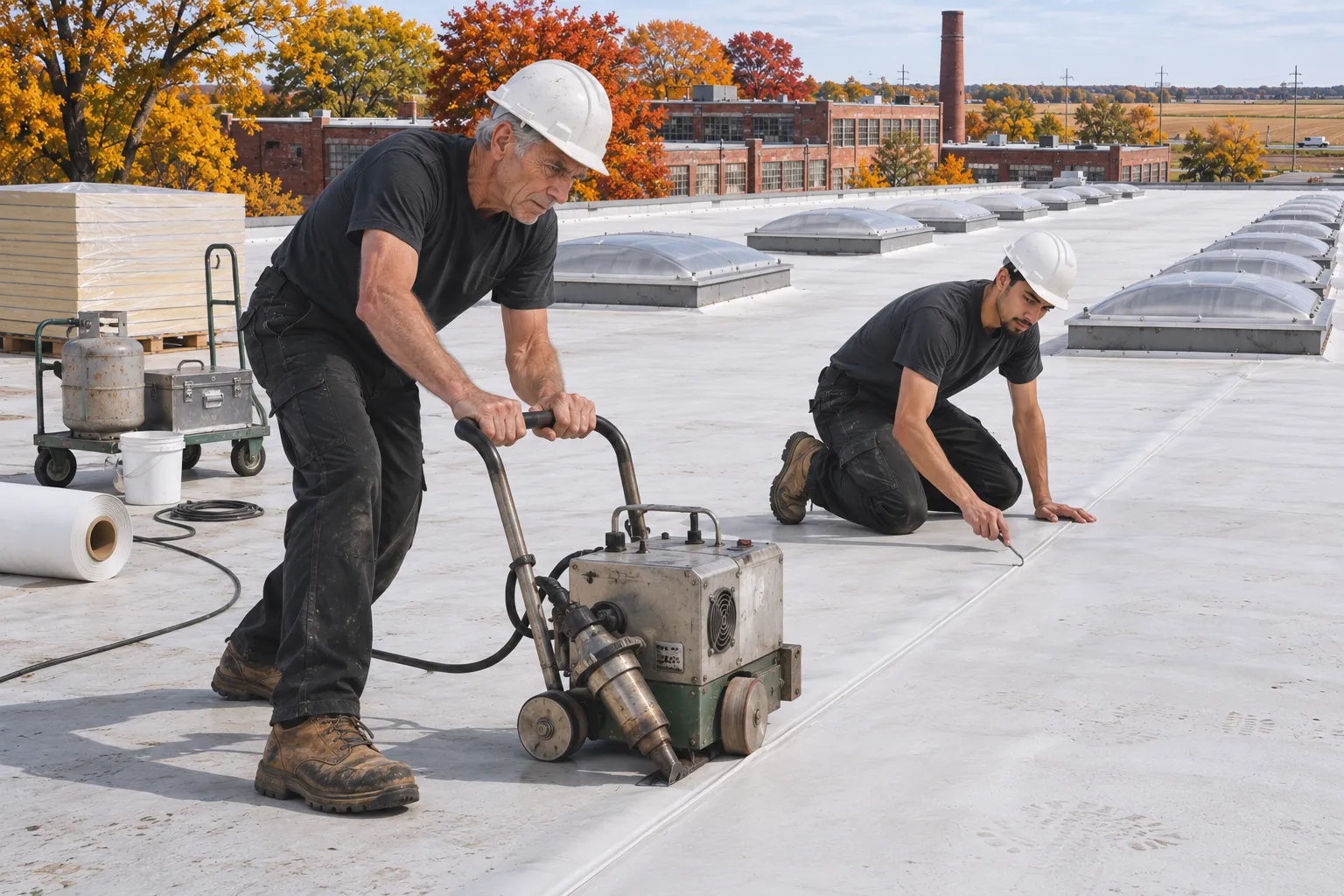
Welded TPO seams and a white surface fit roofs with heavy cooling loads, many rooftop units, or owners who want a reflective finish.
Industrial Roofing
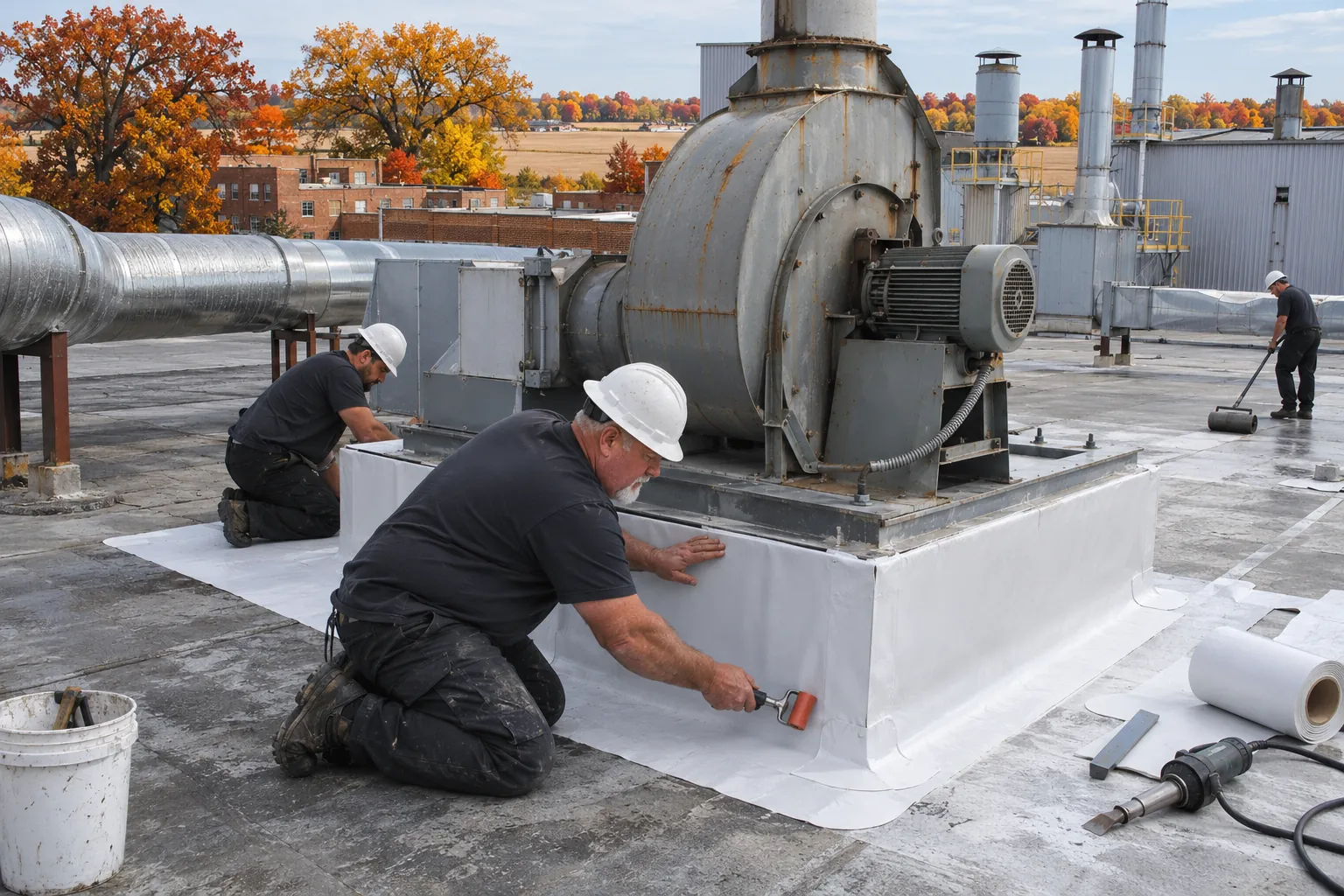
Roofs over production floors need materials that stand up to exhaust residue and a schedule planned around running lines.
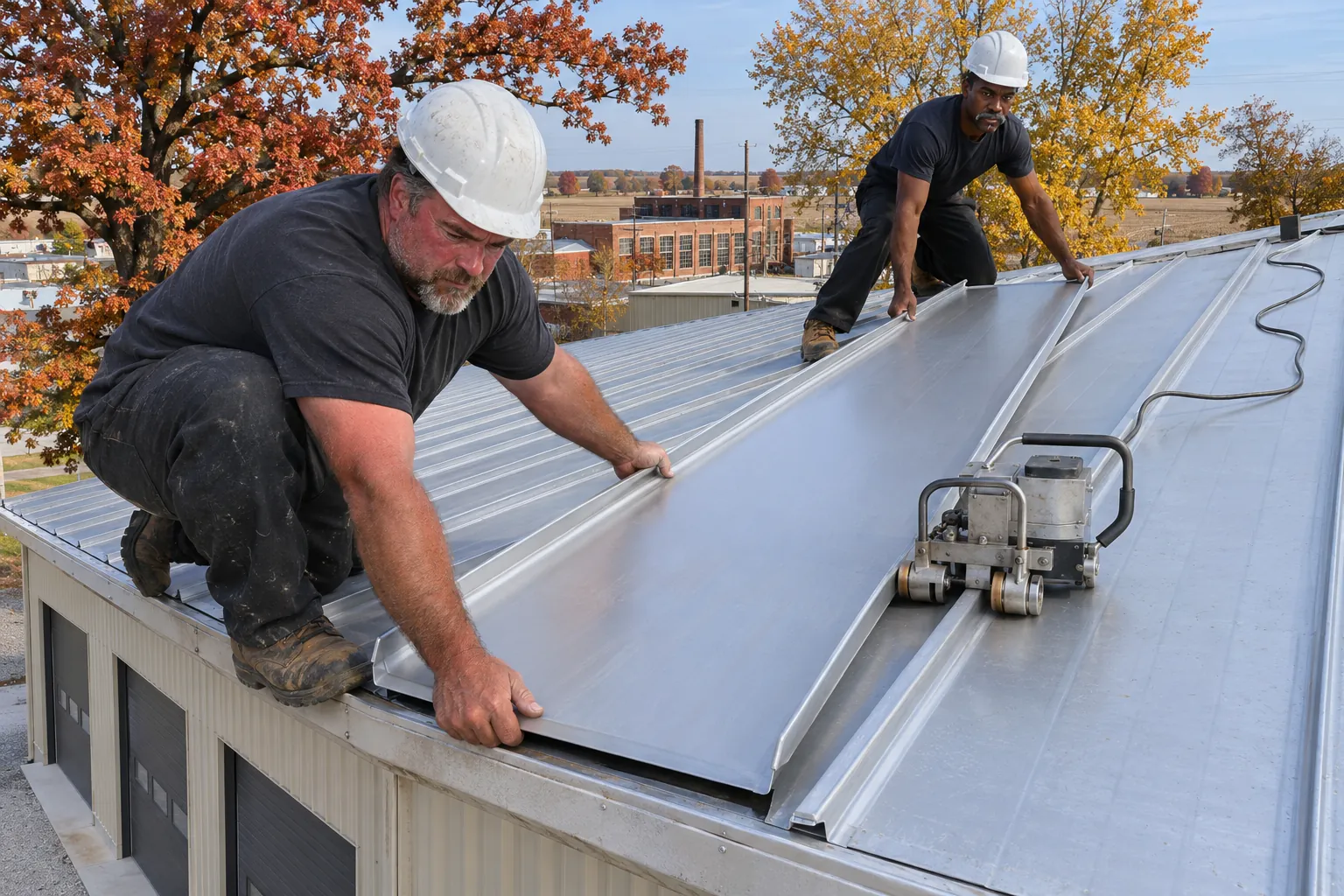
Commercial Metal Roofing
Metal panels on pitched sections and additions shed snow quickly and sit well beside a rubber roof on the flat areas.
EPDM Roofing Questions From Muncie Owners
What happens to EPDM and freeze-thaw cycles on Muncie roofs?
Rubber holds, seams matter
The rubber itself stays flexible in cold, so freeze-thaw rarely harms the sheet. Seams, flashing, and low spots are where it shows: water in an open lap freezes and pries it wider, and ice at drains backs water under flashing. Sealed seams and clear drains matter more than the rubber.
What is the average lifespan of an EPDM roof in Muncie?
Around 20 to 30 years
Around 20 to 30 years is a common expectation, set by membrane thickness, how the sheet is attached, and upkeep. Seam condition, flashing at walls and curbs, and ponding usually decide where a roof lands in that range. Regular checks and early seam repairs extend it, while clogged drains and heavy foot traffic shorten it.
What are common problems with EPDM roofs in Muncie?
Seams and shrinkage
Opened seams, shrinkage that pulls flashing off walls and curbs, punctures from boots and debris, and ponding near drains top the list. Freeze-thaw and snowmelt make each one worse. Catching them before water soaks the insulation keeps the repair small.
Fully adhered vs ballasted EPDM: which suits a Muncie building?
Depends on the structure
Adhered EPDM is glued to the insulation or cover board, giving a smooth, wind-resistant roof that is easy to inspect. Ballasted EPDM is held down by stone, which goes in quickly but adds weight and hides the sheet. Structural capacity, wind exposure, and how often people walk the roof decide.
How does summer heat affect Muncie flat roofs?
Seams and sealants age
Heat expands the membrane and slowly dries out sealants and adhesives. Black EPDM soaks up more of it, while white TPO reflects much of the sun. On flat roofs the stress shows first at seams, flashing, and around rooftop units, which is why inspections focus there.
Hire a Muncie EPDM Roofing Contractor
Send the address and a note about the leaks or the age of the rubber, and we will set up a roof walk.