Muncie Industrial Roofing Contractor
Which Membrane Holds Up Under Your Plant's Exhaust?
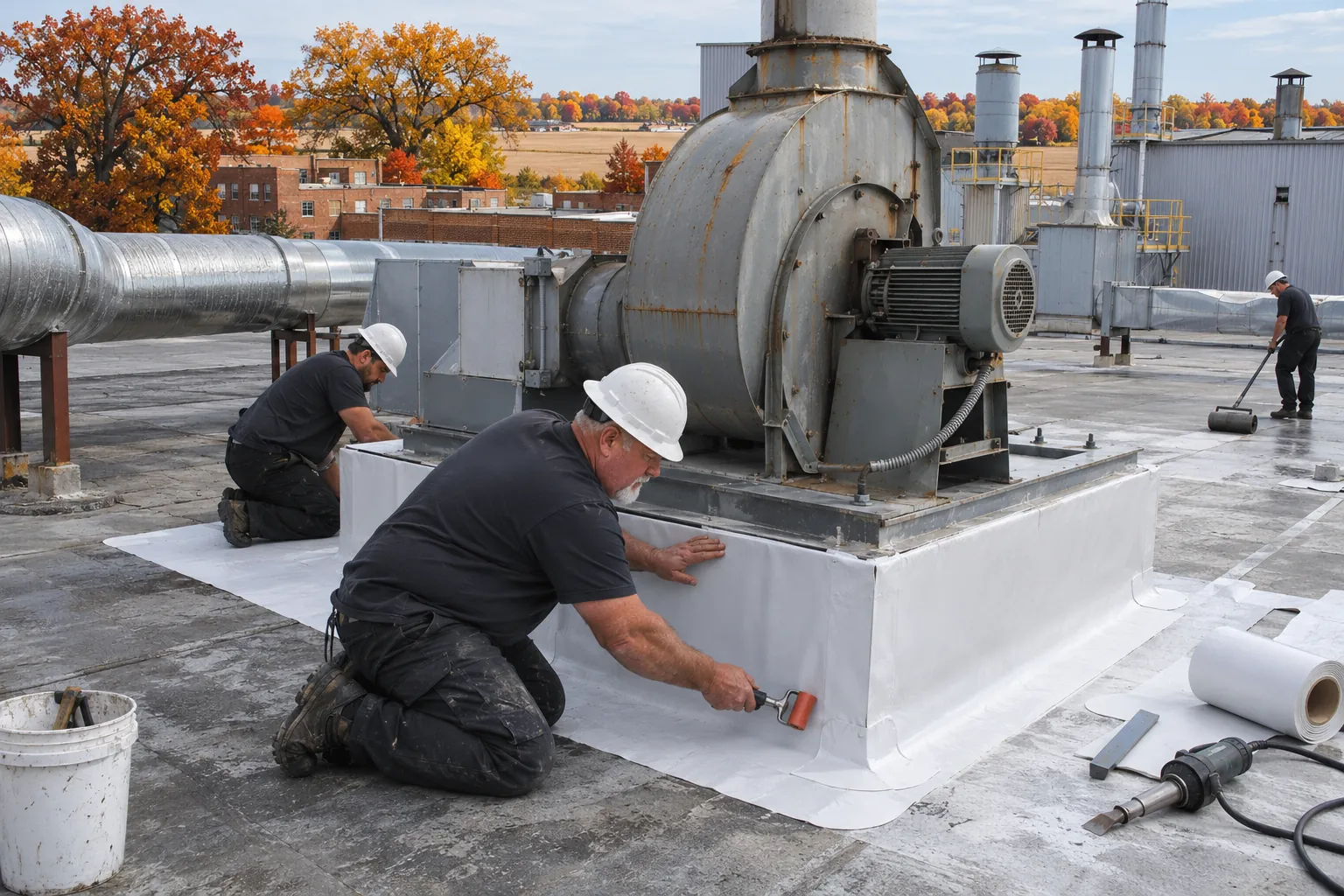
As a Muncie industrial roofing contractor, we roof plants and warehouses around running equipment, choosing membranes for the exhaust and flashing every curb and pipe.
- Roof LoadFans, units, and process stacks
- TrafficWalkway pads on service paths
- PhasingSections around production
- SafetyFall protection at open edges
Planning Muncie Industrial Roofing Around Your Plant
Muncie industrial roofing starts with what the roof carries every day. These conditions show which job fits a plant or warehouse roof.
- Usually Fits
- Sometimes
- Rarely
| What You See On The Roof | Targeted Repair | Recover In Phases | Full Tear-Off |
|---|---|---|---|
| Leaks clustered around a few exhaust fans | Usually Fits | Sometimes | Rarely |
| Membrane softened by grease or process residue | Sometimes | Sometimes | Usually Fits |
| Wet insulation under busy service paths | Usually Fits | Sometimes | Sometimes |
| Roof worn evenly across the field, deck dry | Rarely | Usually Fits | Sometimes |
| Corroded deck over a wet process area | Rarely | Rarely | Usually Fits |
When a line has to keep running, replacement is staged section by section around it.
Industrial Roofing Problems on Muncie Plants
Plant roofs wear faster in some spots than others. These six conditions show up most on industrial buildings.
Residue Around Exhaust Fans
Grease, oils, and process fumes settle around fan housings and break down some membranes. The roof turns soft and gummy in a ring around each stack.
Worn Paths to Equipment
Service techs follow the same lines from the hatch to each unit. Without pads, boots and dropped parts wear through the sheet along those paths.
Low or Rusted Curbs
Curbs set too low let snowmelt over the flashing, and old steel curbs rust at the base. Raising or replacing them comes before new membrane goes around them.
Condensation From Inside
Warm, humid air from wash bays and process areas can soak insulation from below. A vapor retarder in the new roof keeps that moisture away from the boards.
Drains Choked by Debris
Dust, filters, and packaging blow onto plant roofs and collect at the drains. Water backs up and sits on the seams until someone clears the strainer.
Patches on Top of Patches
Years of quick fixes leave mixed materials that stop sticking to each other. Each new patch fails at the edge of the last one.
Industrial Roofing Materials for Muncie Facilities
Material choice on a plant roof follows the exhaust, the traffic, and the deck. These are the main options for industrial buildings.
| Option | What It Means On Your Roof | Where It Fits |
|---|---|---|
| Thick TPO membrane | A heavier welded sheet with extra wear layer over the scrim. | Plants with steady service traffic and many units |
| Chemical-resistant membrane | A sheet rated for the oils or chemicals the exhaust carries. | Food, grease, and process exhaust areas |
| Walkway pads | Rubber or welded pads that mark and protect service paths. | Every route from the hatch to equipment |
| Metal roof panels | Standing-seam panels on sloped sections and additions. | Warehouses, shops, and pitched plant roofs |
Phased Industrial Roofing in Muncie vs. One Big Job
Most plants choose between replacing the roof in phases around production and doing it in one push during a shutdown.
| Planning Point | Phased Around Production | During A Shutdown |
|---|---|---|
| Production | Lines keep running under finished and covered areas. | The building sits empty, so work spreads across the whole roof. |
| Dust and odor | Intakes are covered section by section as work moves. | Intakes can stay shut for the full job. |
| Schedule | Longer overall, broken into planned stages. | Shorter, packed into the shutdown window. |
| Equipment | Units are lifted or disconnected one area at a time. | All lifts and disconnects happen in one plan. |
| Weather risk | Each section is sealed nightly, limiting exposure. | More open roof at once, so forecasts matter more. |
Water Dripping Onto the Production Floor?
Call with the bay or column line where it drips, and we will trace it to the curb, drain, or seam above.
How an Industrial Roof Job Runs at Your Plant
Plant roofs follow four stages, each planned with your maintenance staff so equipment and people stay protected.
Walk And Survey The Roof
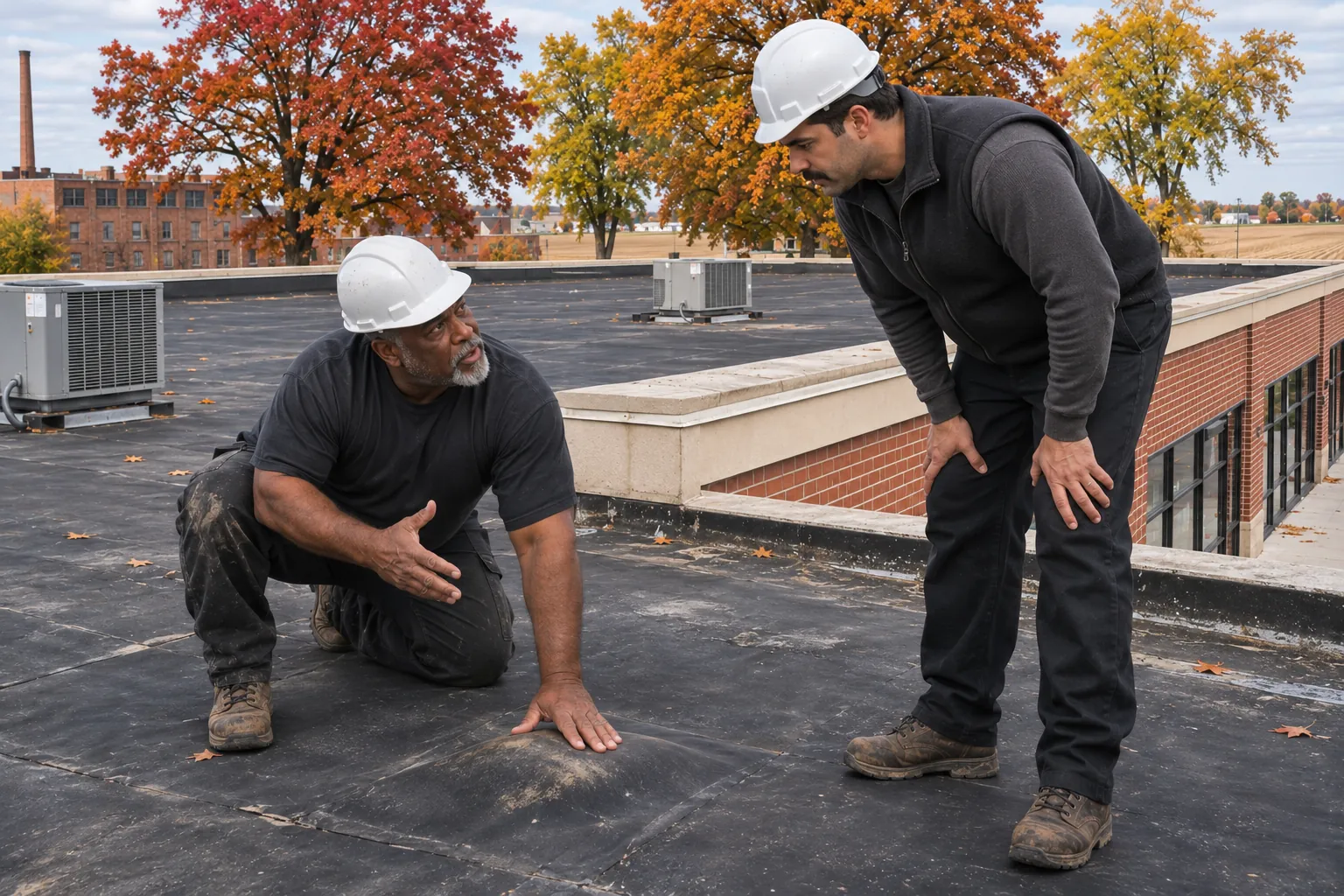
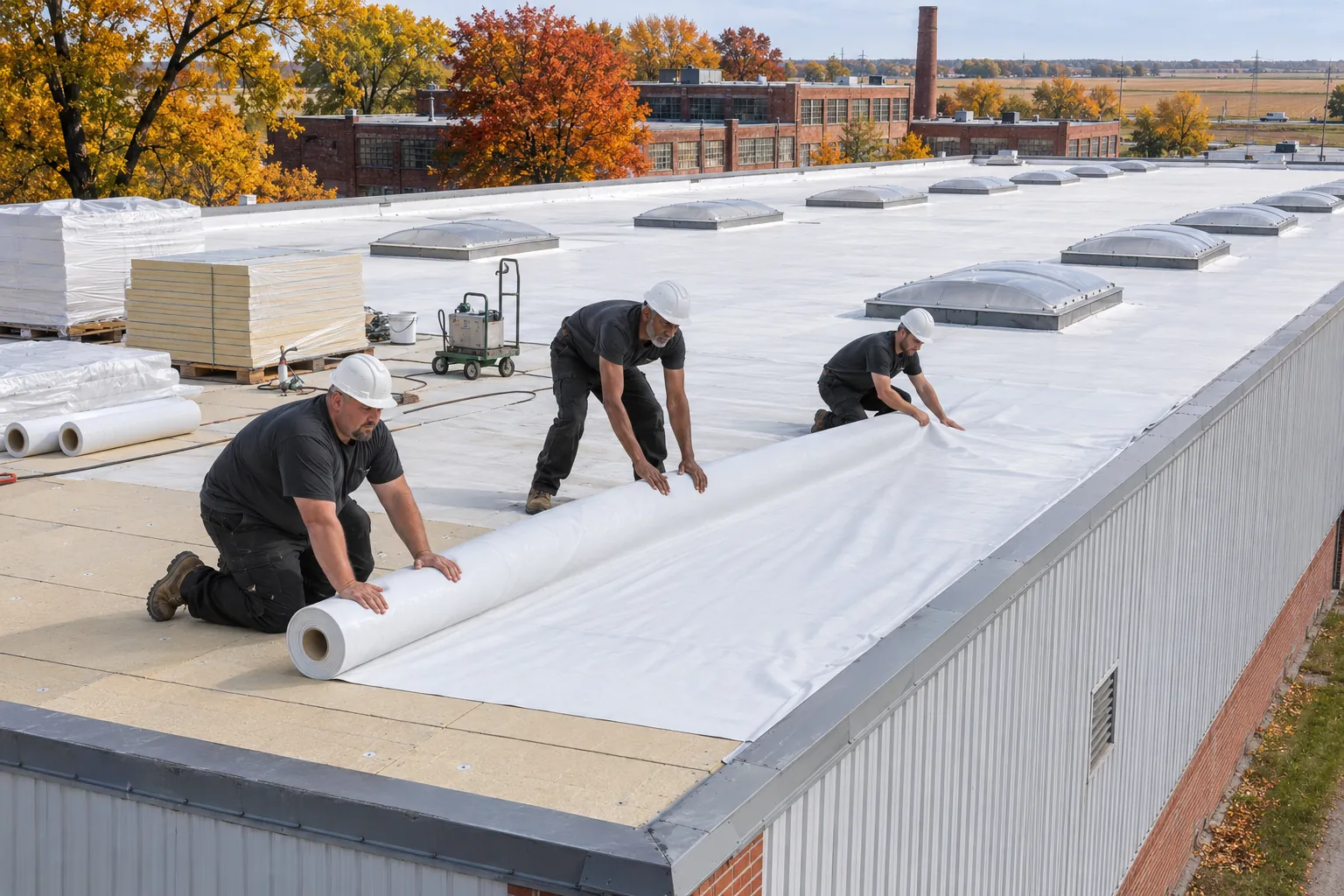
We walk the roof with your maintenance lead, map fans, curbs, and stacks, and run a moisture survey with core samples where readings point to wet boards.
Stage Tear-Off Around Lines
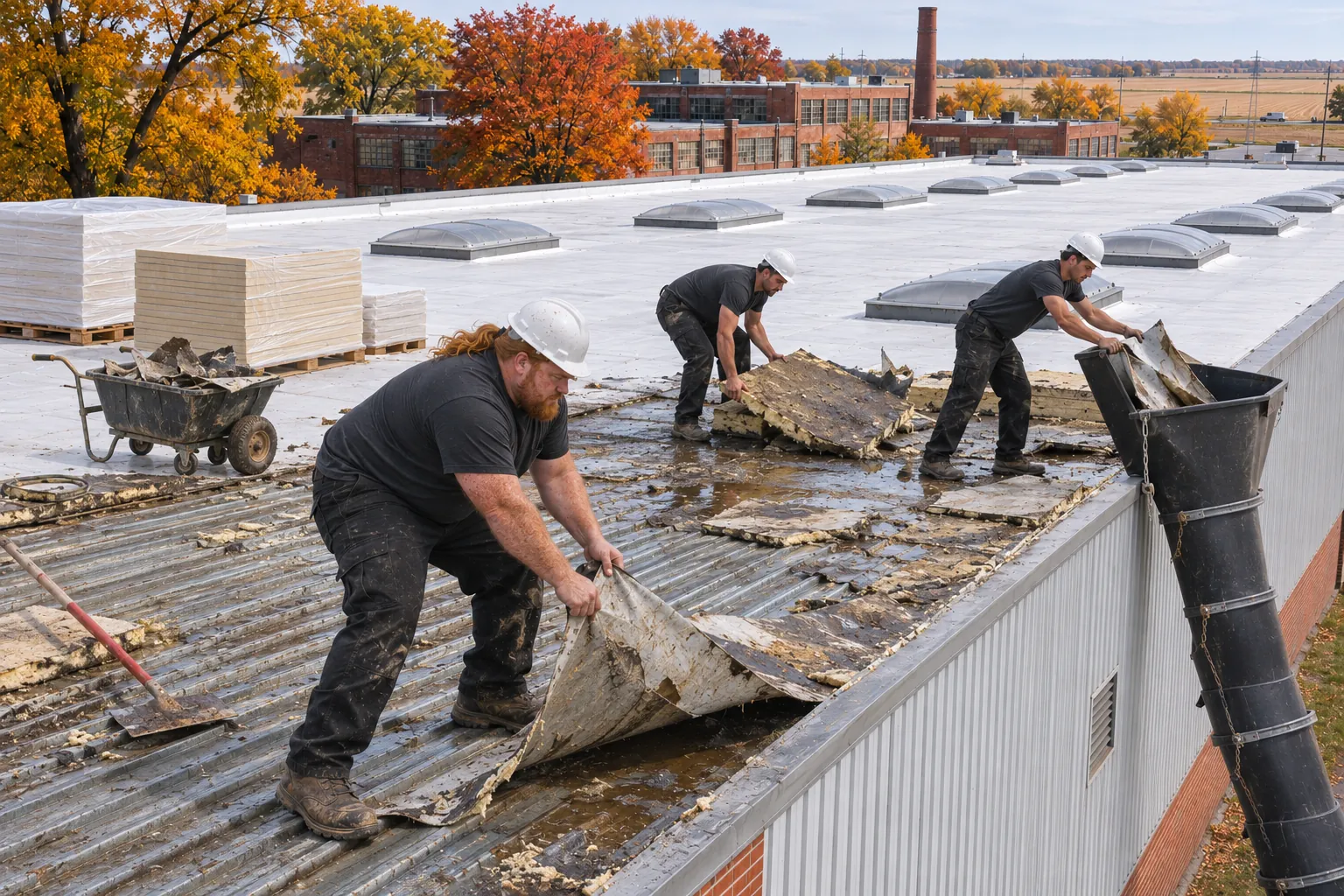
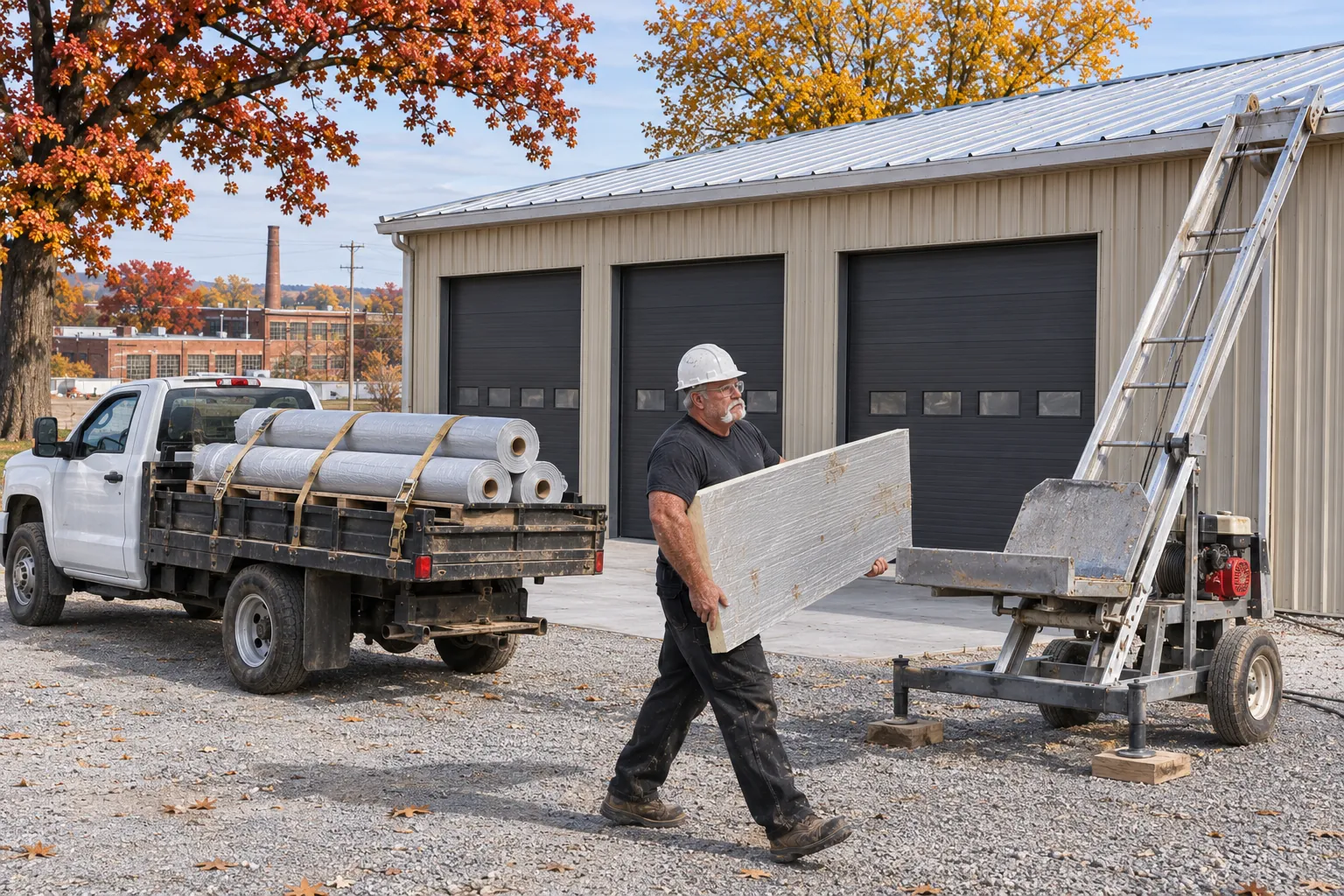
Old roof layers come off in sections lined up with production schedules. Intakes under the work area get covered, and debris goes down a chute to the dumpster.
Install Membrane And Pads
New insulation and membrane go down, low curbs are raised, and walkway pads are welded along every service path to the equipment.
Close Each Phase Out
Each finished area is walked, drains are cleared, and the next phase starts only after the last one is sealed and signed off.
Systems Used on Plant and Warehouse Roofs
Industrial roofs mix systems, so these pages cover the membranes and panels that go on plant buildings.
TPO Roofing
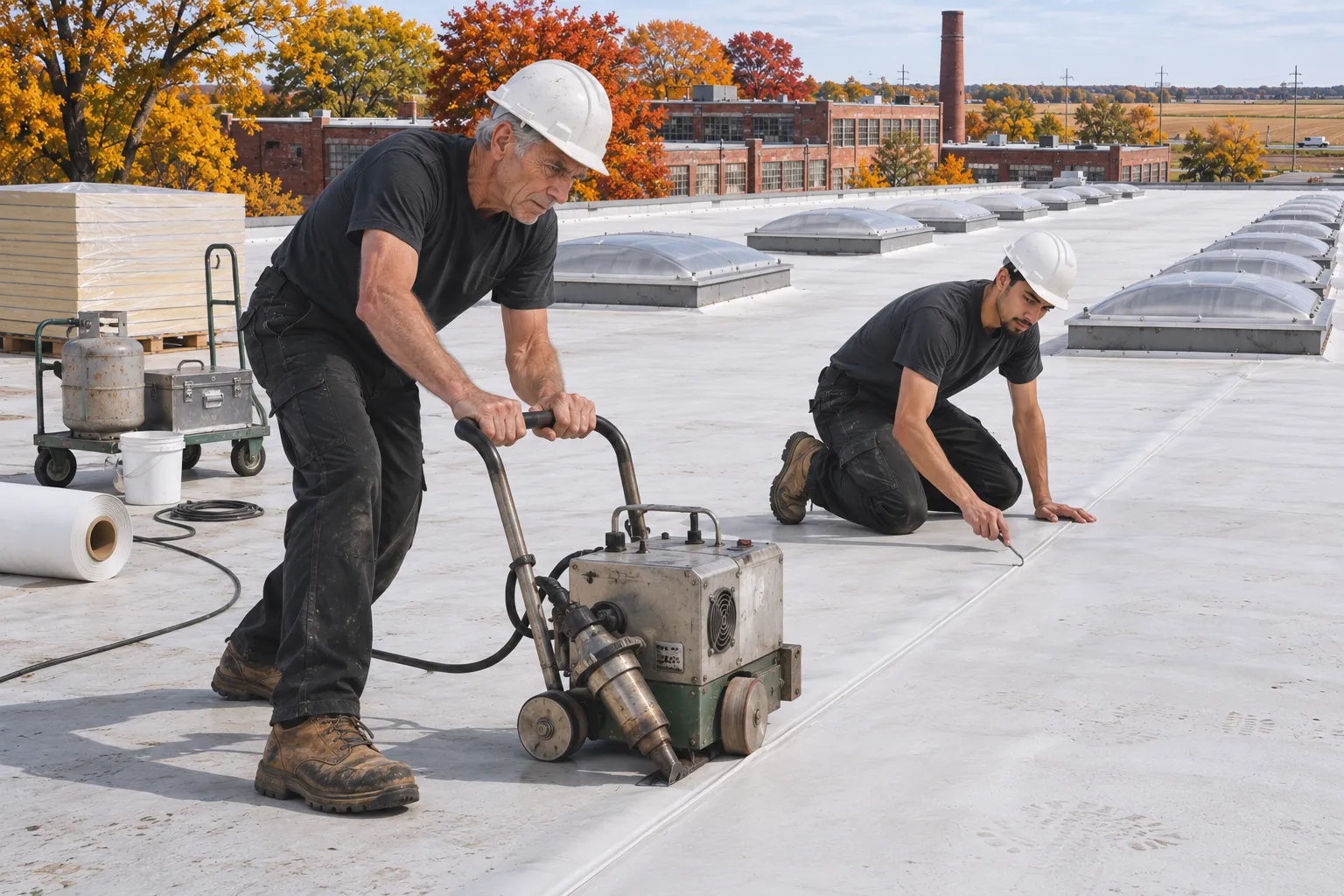
White TPO with welded seams fits large plant roofs that carry cooling loads and dozens of curbs to flash.
EPDM Roofing
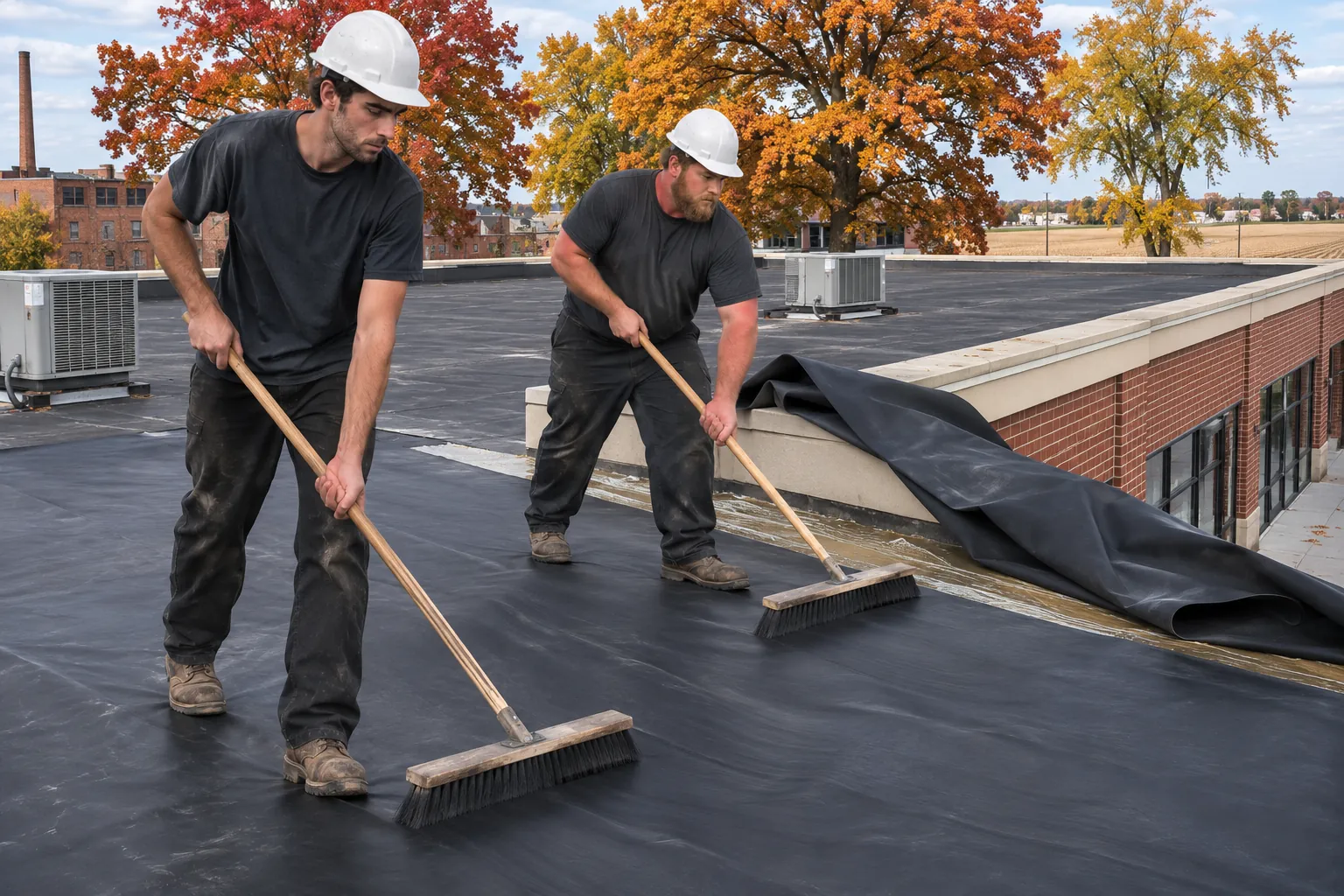
EPDM rubber stays pliable through Indiana winters and is simple to patch on flat warehouse roofs.
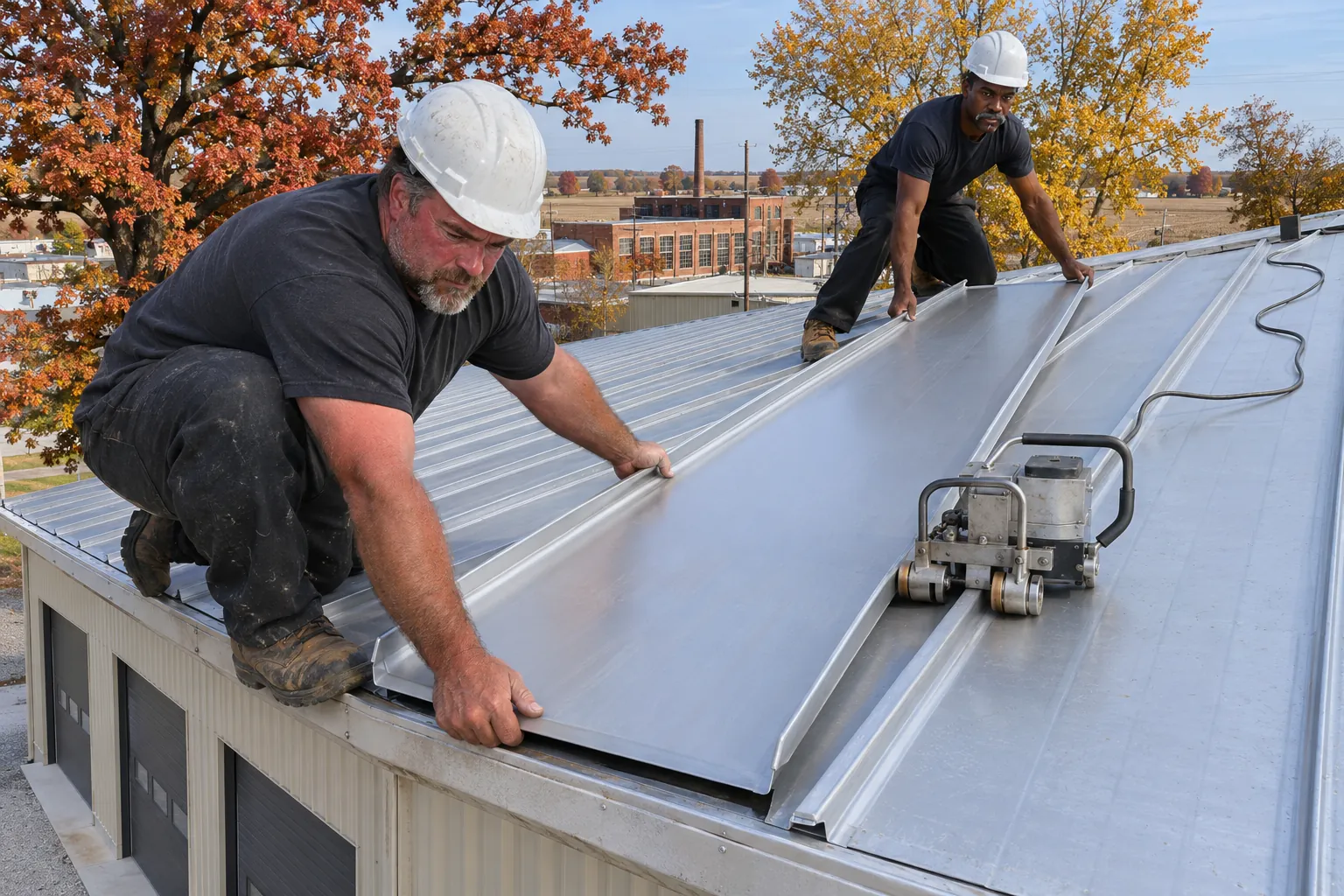
Commercial Metal Roofing
Metal panels give sloped plant sections and loading-dock roofs a quick path for snowmelt and rain.
Industrial Roofing Questions From Muncie Plants
Why do industrial roof walkway pads matter on Muncie plants?
They protect service paths
Pads take the wear on the paths technicians walk to fans, air handlers, and process equipment. Repeated traffic and dropped parts wear through membrane on plant roofs and start leaks. Pads spread the load and mark a clear route from the hatch to each unit.
What industrial roofing materials work on Muncie facilities?
TPO, EPDM, metal
TPO or EPDM covers the low-slope areas and commercial metal panels cover sloped sections, laid over rigid insulation and cover boards. Heat or chemicals in the exhaust, rooftop traffic, the deck, and drainage steer the choice, so the system matches what that roof sees every day.
How does roofing around rooftop equipment work on Muncie industrial buildings?
Every curb flashed
Each curb, pipe, and support gets flashing so water stays out from under the membrane. Low curbs are raised, pipe boots and support pads go in, and service clearance is left around units. When equipment has to be lifted or disconnected, we line it up with your mechanical contractor ahead of time.
When is industrial roof replacement the better call in Muncie?
When leaks spread
Replacement wins when leaks are widespread, insulation is wet over large areas, the membrane is brittle or shrinking everywhere, or repairs keep failing. A moisture survey with core samples shows how much of the roof is still firm. For plants that run around the clock, we phase the work around production.
What roofing works on Muncie plants with heavy rooftop exhaust?
Matched membrane
Plants with heavy exhaust need a membrane that resists the heat, oils, or chemicals coming out of the fans and vents. We find out what the exhaust carries, choose a compatible sheet, and add protection around each fan. Grease and process residue break down some membranes quickly, so material choice matters more here.
Hire a Muncie Industrial Roofing Contractor
Tell us about the plant, the equipment on the roof, and the production schedule, and we will plan the roof walk around it.